
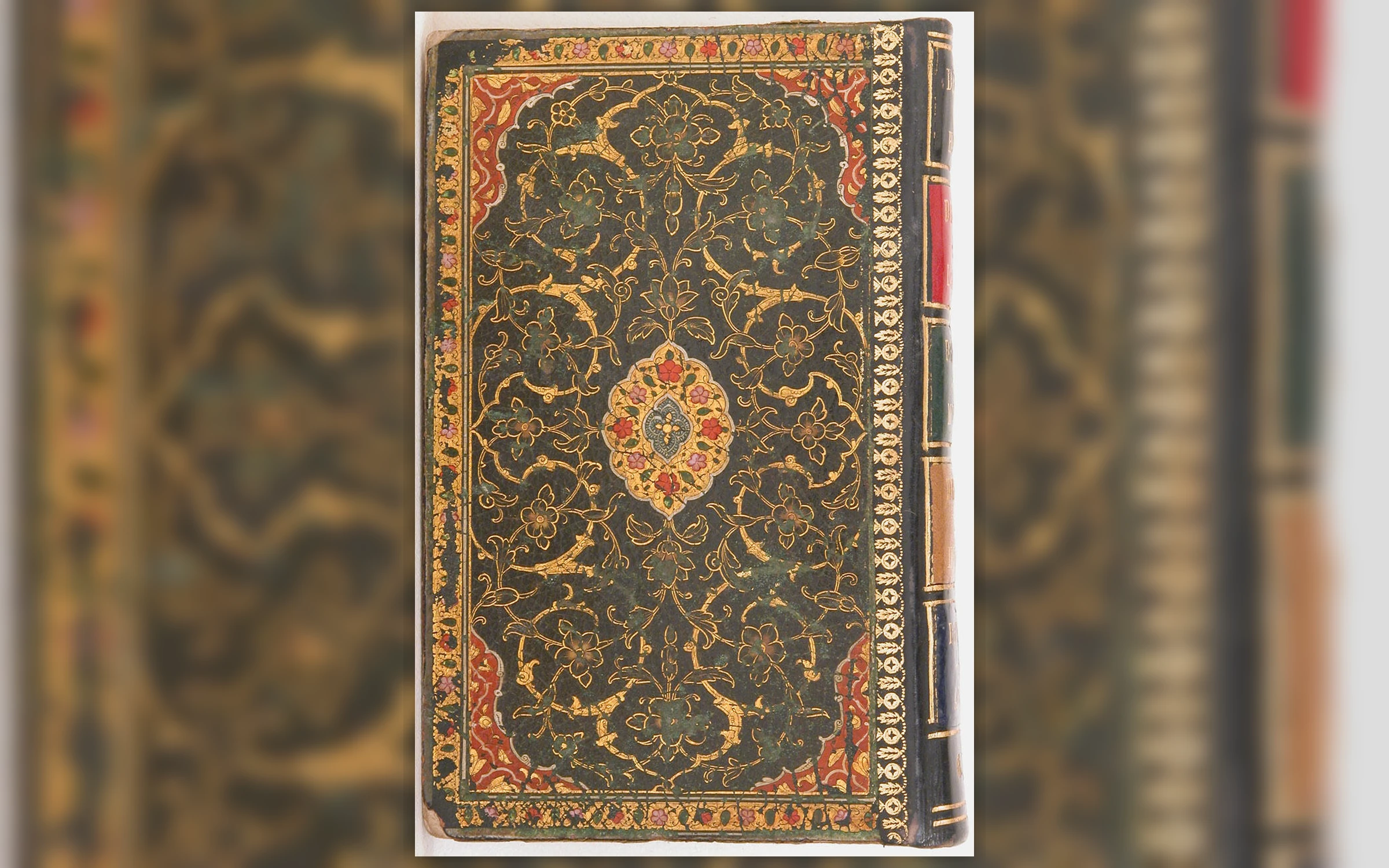
A tradition made through many centres
Persian manuscript painting developed across changing courts, workshops and centres, including Tabriz, Shiraz, Herat, Mashhad, Qazvin and Isfahan. Materials, artists and books moved between them. Folios were detached, repaired, rebound, assembled into albums and recatalogued. Present borders do not map neatly onto historical cultural networks.
The phrase Persian manuscript tradition is therefore useful only when it remains specific. This article uses Iranian, Persian, Persianate and Islamic manuscript as overlapping but not interchangeable terms. Herat, for example, is in present-day Afghanistan and was a major Persianate centre. Calling every manuscript in a broad Islamic corpus Persian erases real linguistic, regional and workshop differences.
A material history should name the object, date or period, production centre or attribution, language, workshop context and later history whenever those facts are known.
Evidence types answer different questions
Historical treatises and recipes preserve terminology, ingredients and procedures within a textual tradition. They do not prove that a particular folio contains those materials. Reconstruction can test whether one interpretation is workable; it does not recreate an original workshop in full. Technical examination describes a surviving object or sample, including later alteration. Catalogue and ownership records help establish object history but may repeat older attributions.
This article keeps these evidence types separate while allowing them to inform one another. A recipe may suggest candidates for analysis. Analysis may show that an object uses materials not named in a text. Codicology may reveal that a page was inserted or repaired. Disagreement is not a nuisance to be hidden. It often shows that the object’s history is more complicated than a single origin story.
Paper, sizing and the prepared page
The painted page is a material system. Paper fibres, sheet formation, surface finishing, sizing, polishing, coatings and repairs affect how inks and colours sit, spread and survive. A smooth, burnished surface may alter absorbency and handling, but no one preparation should be treated as universal across Persian manuscripts.
Technical studies increasingly combine microscopy, imaging and spectroscopy to examine paper, pigments, inks, binders and metallic layers. Recent work on Iranian Qajar manuscripts demonstrates the value of complementary methods while also showing their limits: imaging responses can guide examination, but interpretation depends on reference data, object context and, in some cases, more specific analysis.
A visible surface is therefore not a neutral background. It records preparation, use, ageing and intervention.
Colour materials were variable and layered
Blue may involve ultramarine from lapis lazuli, indigo-related materials, azurite, mixtures or later additions. Reds may include mineral, organic lake and mixed systems. Whites, blacks, greens and yellows also vary across objects and periods. The presence of a colour in a historical text does not establish its use in every manuscript associated with that tradition.
The same visible hue may result from different materials, layer structures or mixtures. Conversely, the same material may look different because of particle size, binder, support, layer thickness, ageing or overpainting. Material identification should therefore remain attached to an examined location and method.
A workshop palette is not merely a list of pigments. It includes binders, paper preparation, metallic materials, inks, mixtures, application sequences and decisions about emphasis, translucency and finish.
Gold and metallic systems need precise language
Gold leaf, powdered gold, shell gold, gold paint and gold-coloured imitation materials are not synonyms. A continuous leaf, a particulate metallic layer and a brass-containing paint can create neighbouring appearances while representing different material systems.
Persian manuscript traditions used gold in writing, illumination, borders, painting and surface emphasis, but the exact form and preparation must be established object by object. Historical terminology can assist interpretation, yet it should not be converted into one universal recipe. Analytical confirmation of elemental gold also does not reveal the binder, workshop procedure or historical name by itself.
This precision protects both cultural interpretation and material analysis. It allows a manuscript to be discussed within a living artistic lineage without turning that lineage into a fixed formula.
The object carries more than its first making
Many manuscripts have histories of repair, repainting, remounting and collection. A material that differs from the proposed date may belong to a later intervention rather than proving the whole object false. A replaced folio can preserve genuine painting from another context. A modern mount can affect how a historic page is read and conserved.
The strongest account is therefore layered: what is attributed to original manufacture, what is later, what remains uncertain and what evidence supports each conclusion. Persian manuscript material history becomes richer, not weaker, when uncertainty is made visible.
There is no single traditional Persian palette. There are objects, workshops, texts and material choices connected through history. Scholarship begins by preserving those distinctions.